
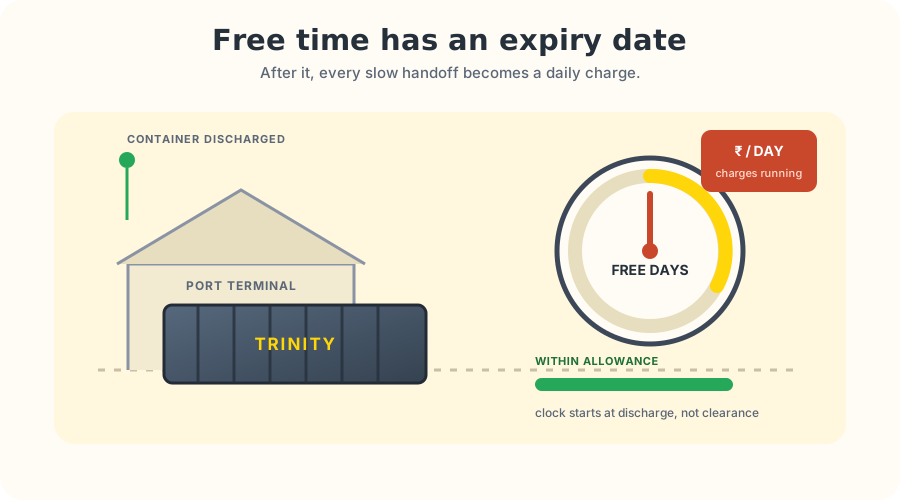
An importer we know cleared a routine shipment of auto components through Chennai a couple of years ago. The cargo was fine. The paperwork was mostly fine. But a classification query held the Bill of Entry for four days, the transporter he had booked stopped answering calls, and by the time the empty container went back to the depot, the shipping line handed him an invoice for more than the freight itself.
He paid it. He had no choice. Ports and lines do not release cargo or take containers back while charges are pending, so arguing comes after paying.
That invoice had three separate charges on it, and he had only ever heard of one. Most importers are in the same position: they know the word "demurrage," use it for every delay-related fee, and then get surprised by how many different meters were running at the same time.
This guide separates those meters. We will go through what demurrage, detention, and storage actually charge you for, how free time really works at Indian ports, where the days usually get lost, and what keeps a delayed shipment from becoming an expensive one.
Three charges, three different meters
The reason these invoices confuse people is that a single delayed container can trigger three separate charges, from two separate parties, for two separate things: the box and the ground.
Demurrage is charged by the shipping line. It applies while your full container sits inside the port or CFS beyond the free time the line gave you. You are paying for keeping the line's container tied up in the terminal when it could be back in circulation.
Detention is also charged by the shipping line. It applies while the container is outside the port in your custody beyond the free days allowed for pickup, unloading, and return of the empty. You are paying for keeping the line's equipment off the road.
Port storage is charged by the terminal or CFS, not the line. It applies to the physical space your cargo occupies on their ground. This is a completely separate tariff from demurrage, with its own slabs, and it usually escalates sharply the longer cargo sits.
So one slow week can produce a demurrage invoice from the line, a storage invoice from the terminal, and then a detention invoice from the line again after you finally gate out. None of these cancels the others.
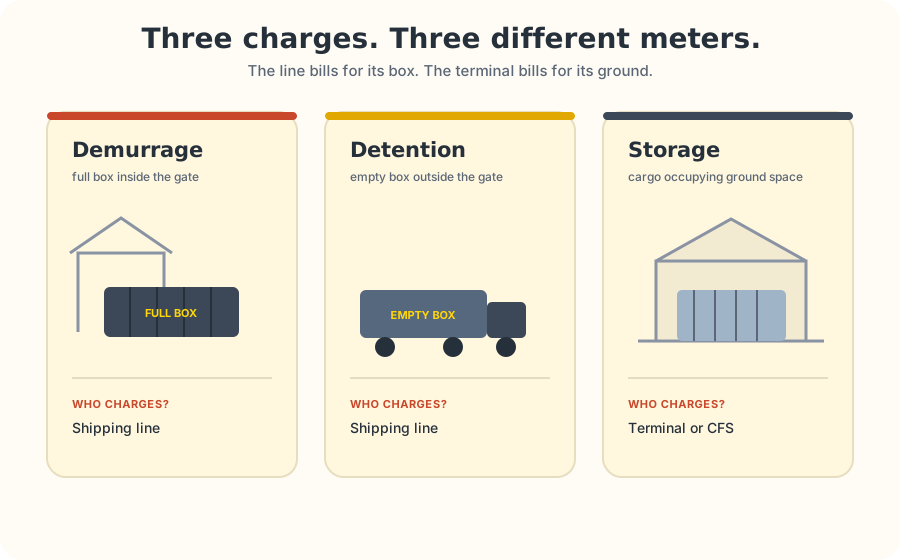
The easiest mental model is this: the line owns the box, the terminal owns the ground, and both of them charge rent when you overstay.
How free time actually works
Every import container comes with a free time allowance: a fixed number of days during which no demurrage applies. In India, you will commonly see somewhere between 7 and 14 combined free days at major ports, but the exact number depends on the line, the port, the equipment type, and what was agreed at booking.
A few things about free time that catch people out:
- It is not standardised. Two lines calling at the same port can give different free days for the same box type. Reefer and special equipment usually get less.
- The clock usually starts at discharge, not at customs clearance and not when you get the arrival notice. Waiting for documents does not pause anything.
- Calendar days count, including Sundays and public holidays. A shipment discharged just before a long weekend has effectively fewer working days.
- Free time is negotiable at booking, not after arrival. If your cargo routinely needs longer, that conversation has to happen before the shipment sails, not when the invoice arrives.
- "Combined" vs "split" matters. Some lines quote demurrage and detention as one combined pool of free days; others give separate windows for inside-port and outside-port time. Combined is usually more forgiving.
Once free time expires, charges accrue per day, per container, and the daily rate typically climbs in slabs. The first few days past free time are the cheapest. After that, the per-day rate steps up, and a long-stay container can end up costing several times its early-slab rate every single day.
Where the days actually go
Almost nobody plans to keep a container for twelve days. It happens because the journey from discharge to empty return has four or five handoffs, and each one quietly takes a day longer than expected.
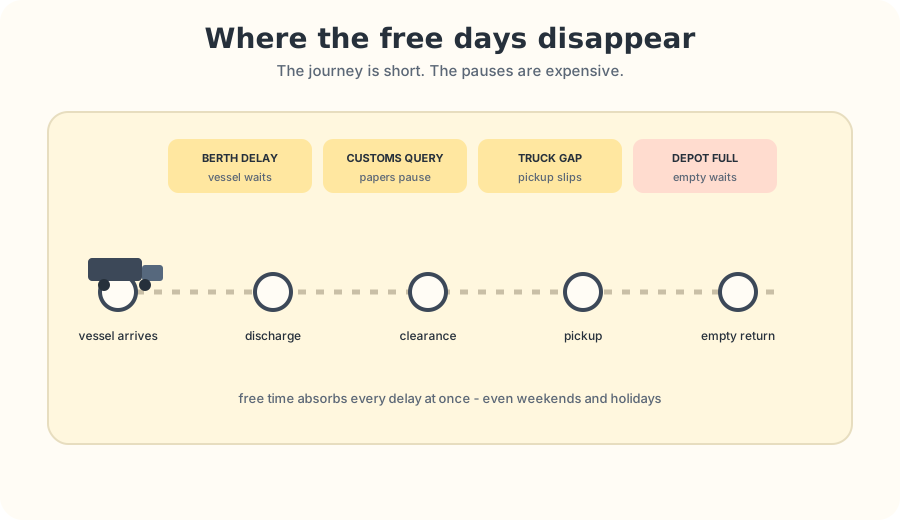
Here is what that looks like in practice:
Berthing and discharge. The vessel arrives on schedule but waits at anchorage because the berth is occupied. Your free time has often already started even though your container is still on the water or sitting in a stack you cannot access yet.
Customs clearance. This is the biggest and most controllable leak. A Bill of Entry filed after arrival, a valuation or classification query, a missing certificate, or a first-time importer's ICEGATE registration issue can each take days. Filing a prior-entry Bill of Entry before the vessel berths removes most of this, and yet a surprising share of cargo still gets filed late.
Duty payment and out-of-charge. Even after assessment, delays in duty payment or waiting for the out-of-charge order add hours that spill into the next day.
Pickup and inland movement. The transporter shows up a day late, the factory cannot unload over the weekend, or the delivery location is far enough inland that the round trip eats two days by itself. For importers around Bengaluru, the Chennai-to-Bengaluru leg alone means detention planning matters as much as port planning.
Empty return. The empty has to go back to a nominated depot, and that depot may be full, far, or have gate queues. If the line redirects you to a different depot, get it in writing, because detention keeps running while you drive around looking for a gate that will take the box.
Each delay is mundane. The problem is that they stack, and the free window absorbs all of them simultaneously.
What a delay actually costs
Rates vary by line, port, and container type, and every tariff changes over time, so treat these as indicative rather than quoted. But to make this concrete, a delayed 20-foot dry container at a major Indian port might see something like:
| Days past free time | Demurrage (per day) | Terminal storage (per day) | Running total for one box |
|---|---|---|---|
| 1-3 | ₹1,500 - ₹3,000 | ₹500 - ₹1,500 | ₹6,000 - ₹13,500 |
| 4-7 | ₹3,000 - ₹6,000 | ₹1,000 - ₹3,000 | ₹22,000 - ₹49,500 |
| 8-14 | ₹5,000 - ₹9,000 | ₹2,000 - ₹5,000 | ₹78,000 - ₹1,47,500 |
A 40-foot container is roughly double. And if you had five containers on the same stuck Bill of Entry, multiply again.
Two things stand out in that table. First, the daily rate itself escalates, so day ten costs far more than day three. Second, demurrage and storage run in parallel, so the real per-day burn is the sum of both columns, and that is before any detention applies once you finally gate out.
For exporters, the same logic applies in reverse: a container gated in early or held at the port waiting for vessel cutoff, documentation issues, or a rolled booking can attract port storage and, in some cases, demurrage on the export leg too.
The moves that keep the meter off
The good news is that most demurrage is process failure, not bad luck, which means it is preventable with boring, repeatable habits.
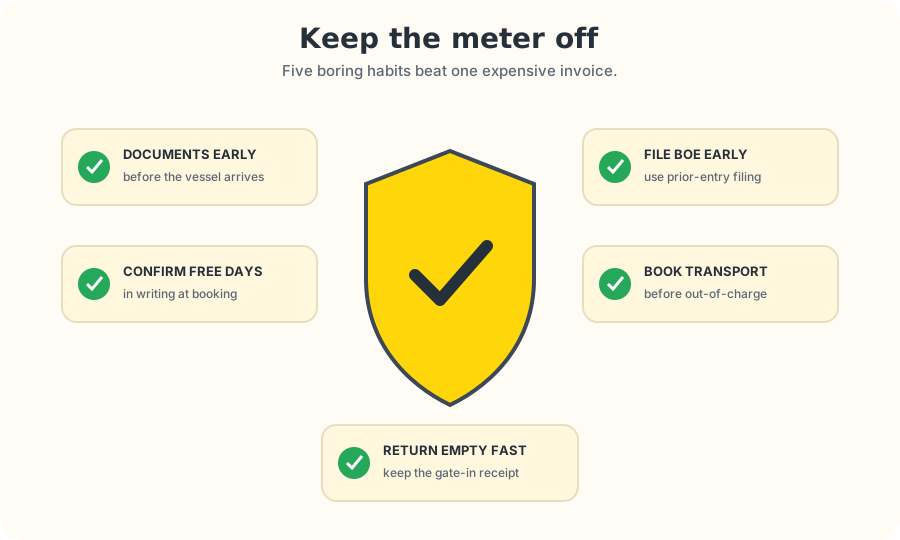
1. Get documents before the ship, not after. The bill of lading, commercial invoice, packing list, and any licences or certificates should be in your broker's hands before the vessel arrives. If the supplier couriers originals late, ask for a telex release or sea waybill when the trade terms allow it.
2. File the Bill of Entry early. India's customs system allows prior-entry filing, and cargo that is assessed before arrival clears dramatically faster. A good customs clearing agent will push for this by default. If yours files only after discharge, ask why.
3. Confirm free days in writing at booking. Not "the usual." The actual number, whether it is combined or split, and the slab rates that apply after it. This takes one email and becomes the reference point if there is ever a dispute.
4. Line up transport before out-of-charge. The truck, the labour, and the factory slot should be booked while customs is still processing, not scrambled together after clearance. This is where Chennai-based importers have an edge over inland ones: the round trip is short, so a day's slippage in pickup is a day, not three.
5. Return the empty immediately, and document it. Unload promptly, confirm which depot the line wants the box at, and keep the gate-in receipt or EIR. If the depot refuses the container or the line redirects you, that written record is what gets wrongful detention reversed.
One more habit sits above all of these: track the free-time expiry date for every live container the day it discharges. A single shared spreadsheet with the discharge date, the free days, and the expiry date will save more money than any negotiation after the fact.
If the charges have already hit
Sometimes the invoice is already in front of you. You still have options, but they shrink with time.
Pay first, dispute after. Ports and lines will not release cargo or accept empties while charges are pending, and storage keeps accruing while you argue. Settle, document everything, and then contest.
Check the math. Slab misapplication happens more often than people expect. Verify the discharge date, the free-time allowance on your booking confirmation, the slab rates on the published tariff, and whether public holidays were handled correctly per that line's tariff rules.
Build the waiver case properly. Lines do consider goodwill waivers, especially for first incidents, genuine documentation delays, or their own failures such as depot closures and missed pickups they arranged. A waiver request that includes a timeline, the cause, supporting documents, and a long relationship history gets taken seriously. "Please reduce this" does not.
Escalate terminal disputes through the right channel. For storage charges at major ports, tariff is published and regulated, and disputes can be raised with the terminal and, if needed, through the port authority. Keep every receipt.
Fix the process, not just the invoice. Whatever caused the delay, whether it was a late Bill of Entry, a transport gap, or a supplier who ships documents by slow courier, that failure will repeat on the next shipment unless something in the workflow changes.
The pattern across all of this
Demurrage feels like a random tax on bad luck. It is actually a rental system with published rules, and it punishes exactly one thing: slow handoffs.
The importers who never pay it are not lucky. They file documents before arrival, they know their free days, they book transport early, and they treat the empty container like a borrowed vehicle with a return date, which is exactly what it is. The ones who pay it regularly are usually re-learning the same lesson shipment after shipment because each invoice gets paid, grumbled about, and forgotten.
If you ship regularly through Chennai or route cargo inland to Bengaluru, the difference between those two groups is worth real money every quarter.
Trinity Freight Services plans shipments around free-time windows, not just freight rates. We file early, coordinate clearance and transport as one movement, and flag expiring free days before they turn into invoices. Talk to us about your next import or export.