
A buyer in Hamburg once called us in a panic. His container had landed, the goods were sitting in the port, and the line would not release them. He had paid his supplier in full. He had the invoice, the packing list, the arrival notice. What he did not have was one specific piece of paper, and without it the cargo was going nowhere.
That piece of paper was the bill of lading. For a document most people barely glance at, it has a strange amount of power. It can release your goods or trap them. It can be worth more than the cargo itself. And the version you ask for, often without thinking, decides whether your buyer collects the box the day it lands or waits a week for a courier.
This guide is the one I wish that buyer had read first. We will go through what a bill of lading actually is, who issues it, every type you are likely to meet, and the handful of mistakes that quietly cost importers and exporters real money.
What a bill of lading actually is
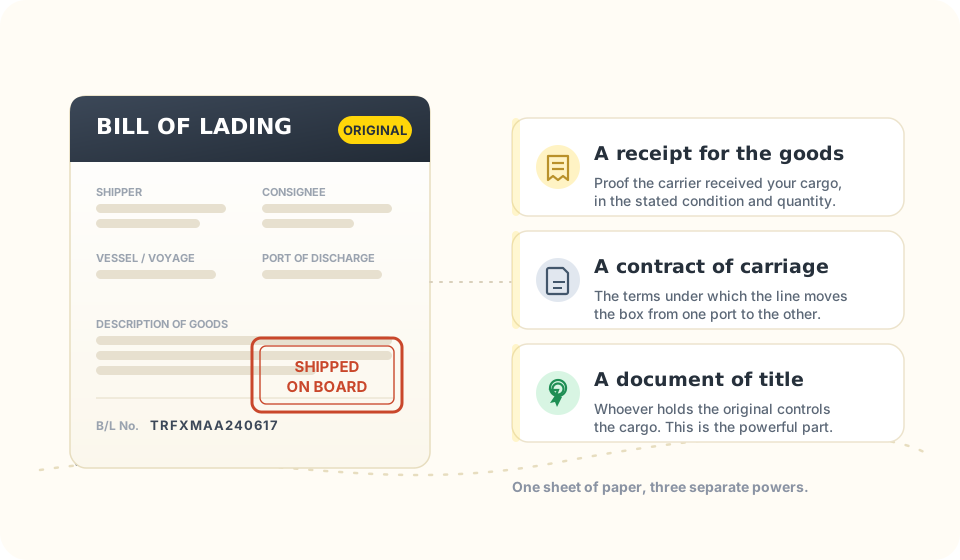
A bill of lading, usually shortened to B/L or BL, is the document a carrier issues for cargo it has accepted for shipment. That sounds dull until you realise it is doing three separate jobs at the same time, and people get into trouble by only thinking about one of them.
It is a receipt. The carrier is confirming it received your goods, in the stated quantity and apparent condition, on a stated date. If the box looked fine when it was loaded, the bill says so.
It is a contract of carriage. The terms printed on it, and the ones referenced on the back, govern how the line moves the cargo and what happens if something goes wrong. You agreed to a contract whether or not you read it.
And it is a document of title. This is the part that surprises people. For a negotiable bill, whoever lawfully holds the original controls the goods. Title to the cargo can pass from hand to hand by passing the paper. That single feature is why the Hamburg buyer's container would not move, and it is the thread running through everything below.
Most other shipping documents do one job. The bill of lading does three, and they do not always pull in the same direction.
Who issues a bill of lading, and when
The carrier issues it. That means the shipping line, or an agent signing on the line's behalf. If a freight forwarder arranges your shipment, they may issue their own bill too, which we will get to in a moment, but the underlying document always traces back to whoever is actually carrying the cargo.
The shipper, your supplier or you, receives the bill after the goods are handed over. Timing matters here. When the carrier first takes the cargo into its custody at the terminal, it can issue a received for shipment bill. Once the box is actually loaded onto the vessel, the bill is updated with a shipped on board notation and the load date. That little stamp is not decoration. A bank paying out under a letter of credit almost always wants to see "shipped on board," because it proves the goods left, not merely that they reached the gate.
So the honest answer to "who issues a bill of lading" is the carrier or its agent, and the honest answer to "when" is after they have your cargo, with the on-board date added once it sails.
What's on a bill of lading, and which fields bite
You do not need to understand every box on the form. You need to understand the six that cause problems when they are wrong.
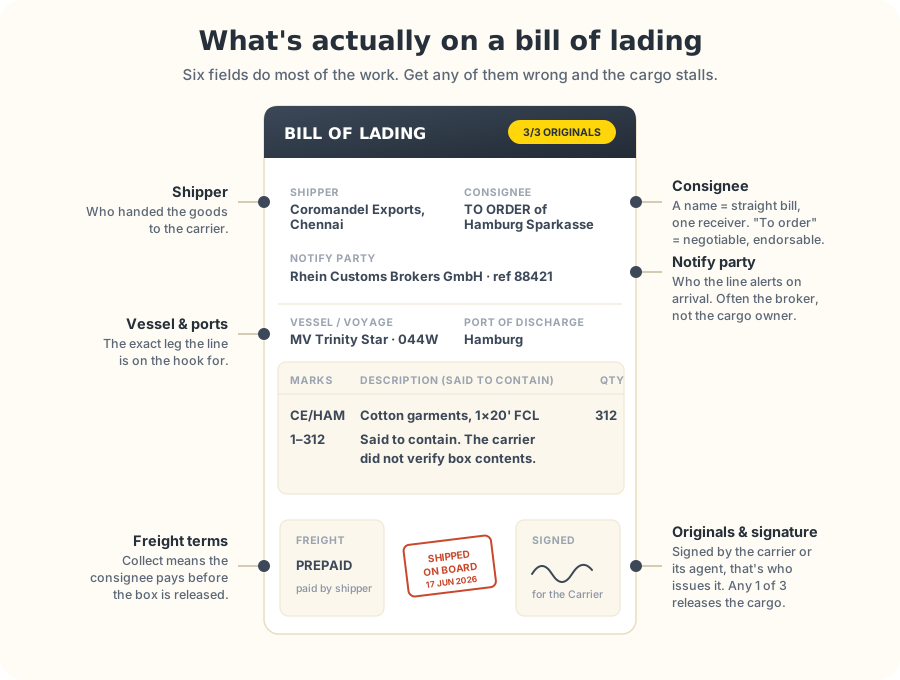
The consignee field is the one that decides almost everything about how the cargo gets released, and it is covered in its own section below. The notify party is simply who the line alerts when the vessel arrives. People assume the notify party owns the cargo. Often it is the customs broker, and the real owner is somewhere else entirely.
Freight terms read either prepaid or collect. Prepaid means the shipper has paid the ocean freight. Collect means the consignee pays it, and on a collect bill the line will not hand over the cargo until that freight is settled. If you are the importer and you did not expect to pay freight, a collect bill is an unpleasant surprise at exactly the wrong moment.
The description of goods carries the quiet phrase "said to contain." The carrier is receipting what was declared to it, not certifying what is sealed inside the container. That distinction matters the day a claim is filed.
Then there is the line that almost nobody reads: the number of originals issued. A negotiable bill is usually printed as a set of three originals. Any single one of them can release the cargo, which means all three have to be controlled. Lose one and you have a problem that takes indemnities and bank guarantees to solve. Finally, the bill is signed for the carrier, and that signature is the formal answer to who issued it.
Master vs house bills of lading
This is where forwarders and importers most often talk past each other, so it is worth slowing down.
When a freight forwarder or an NVOCC consolidates cargo, two bills get created for the same shipment. The shipping line issues one master bill of lading, the MBL, to the forwarder. The forwarder then issues its own house bill of lading, the HBL, to each actual shipper whose goods are in the box.
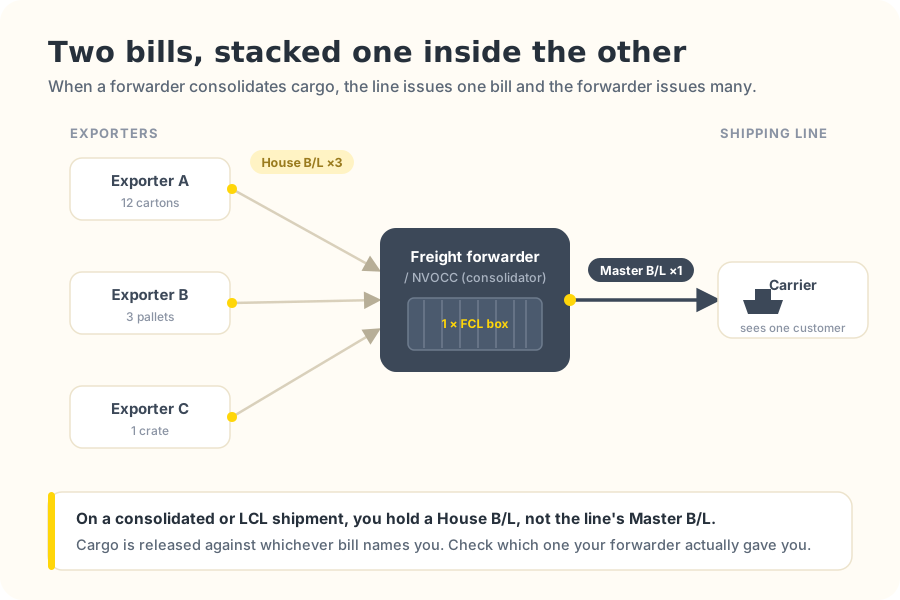
The reason this trips people up is that the two bills name different parties. On the master bill, the shipper is the origin forwarder and the consignee is the destination forwarder. On your house bill, you are the shipper and your buyer is the consignee. Both are real bills of lading. They just operate at different layers.
For practical purposes, if you booked through a forwarder, the document that governs your cargo is the house bill they gave you, and the cargo is released against that. This matters most on LCL shipments, where consolidation is the whole point and you will almost never see the line's master bill. The one thing worth checking is that the house bill is issued on a recognised forwarder's form and that the destination agent is reachable, because a house bill is only as good as the forwarder standing behind it.
The types of bill of lading, decoded
"Types of bill of lading" sounds like there are dozens. There are really just a few questions, and each answer gives the bill a name. A single document can carry several of these labels at once.
| The question | The answer, and what it's called |
|---|---|
| Who can claim the goods? | Named consignee only: straight B/L. Consigned "to order," transferable by endorsement: order B/L. |
| Is the cargo on the vessel yet? | Carrier has custody: received for shipment. Loaded and sailing: shipped on board. |
| Any damage noted? | No adverse remarks: clean B/L. Notes about damaged goods or packaging: claused (or "dirty") B/L. |
| Who carries it, under what terms? | A liner service: ordinary liner B/L. A chartered vessel under a charter party: charter party B/L. |
| Is it the original set, or a substitute? | First set issued at origin: the original bill. A reissued replacement set: switch B/L. |
Two of these deserve a word of caution. A charter party bill of lading is issued for cargo on a chartered ship and is subject to the charter party terms, which the bank financing your trade has not seen. Letters of credit reject charter party bills unless they are specifically allowed, so do not accept one under an LC without checking first.
A switch bill of lading is a second set issued to replace the first, usually to change the shipper, the load port, or the cargo description. It has legitimate uses, often when a trader buys from one country and sells to another and does not want the end buyer to see the original supplier. It is also exactly the kind of document that gets abused, so a careful carrier issues a switch set only after the first full set is surrendered, and never leaves two live sets in circulation.
Straight vs to order: is a bill of lading negotiable?
Here is the single line that decides whether your bill is a negotiable instrument: the consignee.
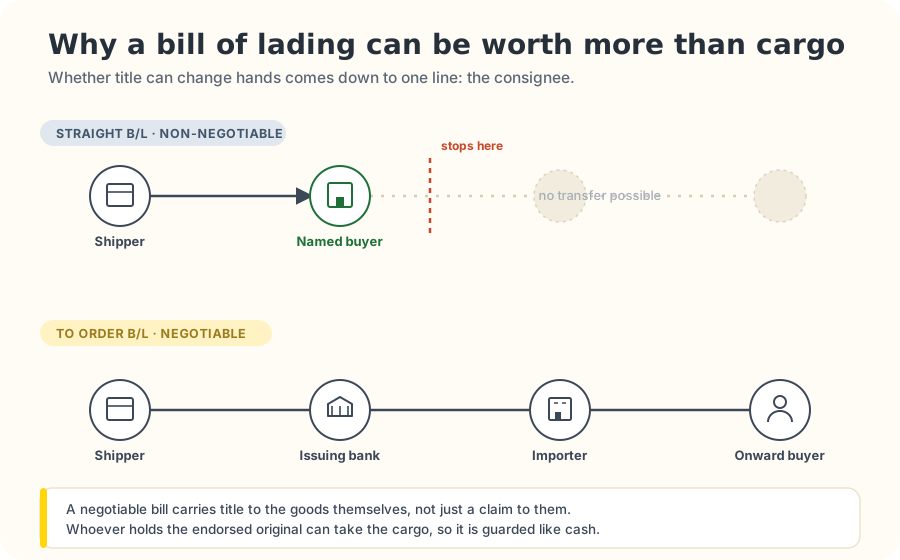
If the consignee box names a specific company, you have a straight bill of lading. It is non-negotiable. The goods are meant for that named party and the bill cannot be passed to someone else. Simple, and fine when you are shipping to your own branch or a buyer who has already paid.
If the consignee box reads "to order," or "to order of [a bank]," you have an order bill of lading, and it is negotiable. Title to the goods travels with the document. The holder signs the back, endorses it to the next party, and that party can now claim the cargo. This is how trade finance works. The shipper consigns the bill to the order of the importer's bank, the bank releases it to the importer once payment terms are met, and the importer presents it to collect the goods. The paper moves down a chain, and the cargo follows the paper.
Now the Hamburg story makes sense. His bill was consigned to order. Until the original, properly endorsed, reached the line at destination, the carrier had no authority to release anything, no matter how many invoices he waved. The document of title was still in transit. A negotiable bill of lading is guarded like cash precisely because, in the right hands, it more or less is.
Original, sea waybill, or telex release: how the cargo changes hands
This is the most practical decision you will actually make on a shipment, and most people make it without realising they are choosing. There are three common ways to get cargo released, and they trade speed against control.
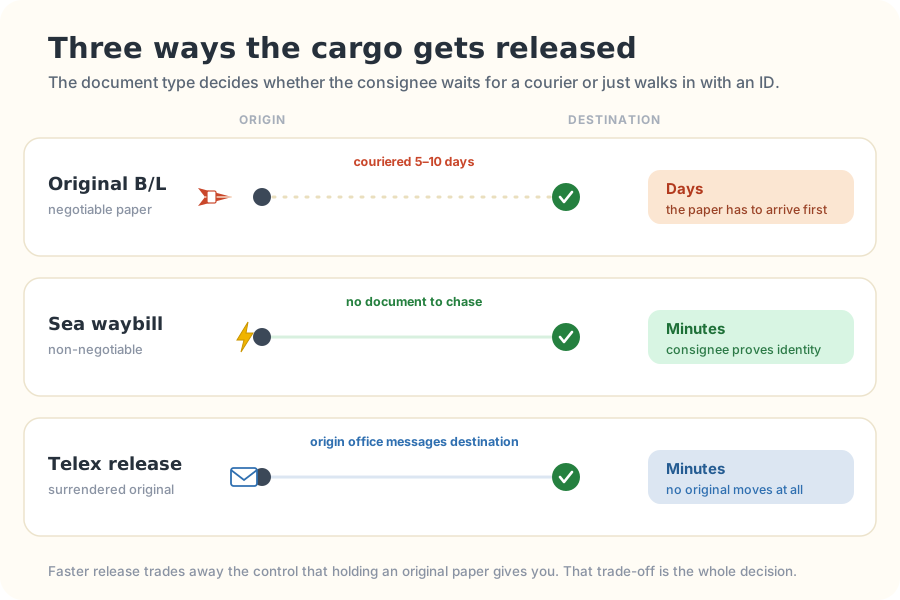
With original bills, the carrier hands over the cargo only against a presented original. The full set has to physically travel to the destination, usually by courier, and only then can the consignee collect. This is the safest option and the slowest. It is the right choice when payment is not yet secured, because the originals are your leverage. The cost is time, and on a short sea route the paperwork can easily arrive after the ship does.
A sea waybill is non-negotiable and has no original to send. The named consignee simply proves who they are and takes the cargo. It is fast and it removes the courier from the critical path. The catch is that you give up the control an original gives you, so a sea waybill suits shipments to a trusted buyer, a related company, or anyone already paid.
A telex release, also called surrender or express release, is the middle path people use most. The shipper surrenders the full set of originals to the carrier at origin. The line then messages its destination office to release the cargo without any original being presented there. You get the speed of a waybill while still using an original bill, but only do it once you are comfortable letting the goods go, because surrendering the originals surrenders your hold over them.
Pick the release method to match how much you trust the other side and whether you have been paid. That is the entire decision, and it belongs in the conversation before booking, not after the vessel sails.
The mistakes that strand cargo at the port
Most bill of lading problems are not exotic. They are the same few errors, repeated.
Surrendering control before payment. Agreeing to a telex release or handing over originals before the money is secure means you have given away your only real leverage. Sequence the release to the payment, not the other way around.
Name and spelling mismatches. If the consignee or notify details on the bill do not match the buyer's import documents, or the description does not line up with the invoice and the HS classification, customs and the bank both have grounds to hold things up. Check the draft bill before it is finalised, while corrections are still free.
Letting an original go stale. Under a letter of credit, the bill has to reach the bank within the presentation window. Present it too late, after the goods have effectively arrived, and you have a stale bill the bank can refuse. The shipment is fine; the paperwork killed the payment.
Ignoring prepaid versus collect. An importer who did not realise the freight was on collect terms discovers it at release, when the line wants the freight before the box moves. Know which way the freight reads before the cargo is on the water.
Forgetting the bill is the clock on demurrage. While the right bill is missing or in dispute, the container sits, and the port and the line keep charging. Detention and demurrage are the predictable tax on a bill of lading that was not sorted out in time.
None of these need deep expertise to avoid. They need someone to read the draft bill carefully and ask the boring questions early.
How the bill of lading fits the rest of your shipment
The bill does not live alone. It connects to nearly every other decision on the shipment.
Your Incoterm decides who contracts with the carrier and who pays the freight, which is what shows up as prepaid or collect on the bill. Whether you ship FCL or LCL decides whether you deal with a clean master bill or a forwarder's house bill. And on the import side, the bill of lading number is what ties your cargo to the Import General Manifest and your Bill of Entry, and the line will not issue a delivery order until the bill is presented or released. A good freight forwarder and customs broker spend a real part of their day making sure these pieces agree, because when they do not, the cargo waits.
For shipments moving through Chennai and Bengaluru, the same rules apply, but the rhythm differs. Sea cargo through Chennai gives the originals time to travel, so a full set of originals is often workable. Air and faster sea lanes serving Bengaluru leave less slack, which is exactly where a telex release or a sea waybill earns its keep.
The short version
A bill of lading is a receipt, a contract, and, when it is negotiable, a document of title. That third job is where the power and the danger both sit. Know whether your bill is a master or a house bill, whether it is straight or to order, and how you intend to release the cargo, and most of the expensive surprises disappear before they start.
The importers and exporters who never think about the bill of lading are the ones who eventually get a phone call like the one from Hamburg. The ones who decide these things on purpose, before booking, almost never do.
Trinity Freight Services handles ocean and air documentation, including bill of lading instructions, telex releases, and house bills, as part of our import clearance work through Chennai and Bengaluru. Contact us and we will make sure your cargo and your paperwork arrive ready for each other.