
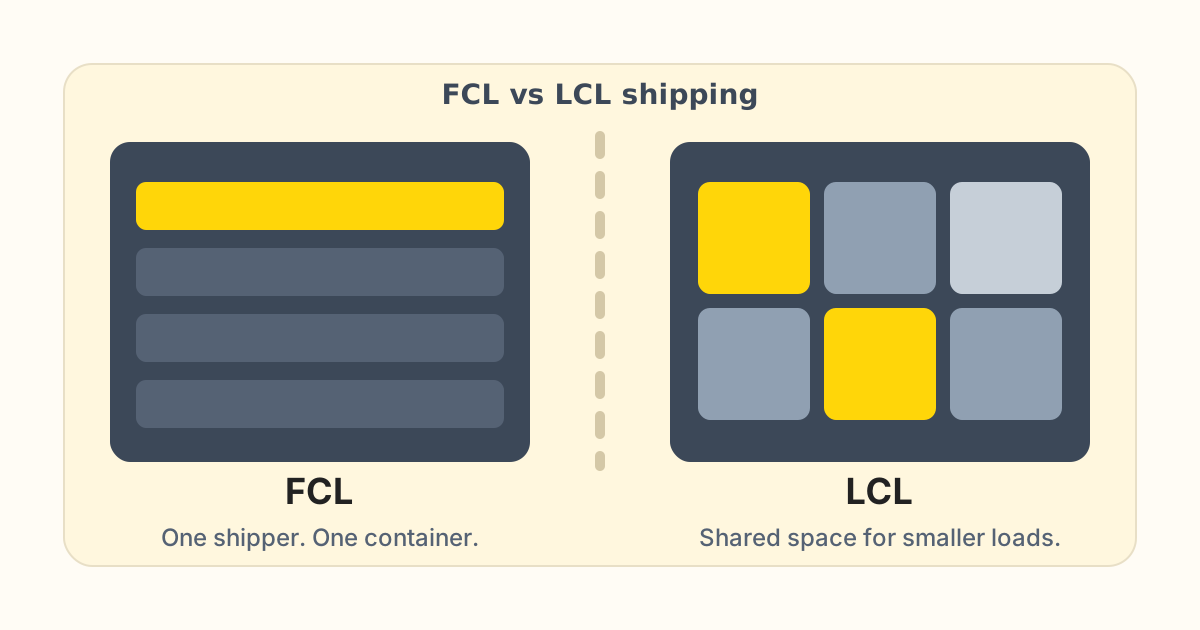
If you are planning an international sea shipment, one of the first questions your freight forwarder will ask is simple: should this move as FCL or LCL?
Those four letters matter more than most first-time importers expect. They affect freight cost, cargo handling, transit time, and how much control you have once the shipment reaches the port.
In this guide, we will break down what FCL and LCL actually mean, how they are priced, where businesses often get the comparison wrong, and how to choose the option that fits your cargo moving in or out of India.
What is FCL shipping?
FCL stands for Full Container Load. In simple terms, you book an entire container for your shipment.
That does not mean the container must be packed wall to wall. It only means the container is reserved for one shipper's cargo for that movement. You may use every inch of it, or you may leave some space empty. Either way, the box is yours.
Think of FCL like hiring the whole truck instead of sharing it with other consignments. You pay for dedicated space, fewer touchpoints, and a simpler movement from stuffing point to destination.
The most common FCL container types are:
- 20-foot standard container for dense cargo or moderate-volume shipments
- 40-foot standard container for larger shipments
- 40-foot high cube container when you need extra cubic capacity
Special equipment such as reefers, open-top containers, and flat racks also falls under FCL, though those are used for cargo with specific handling requirements.
What is LCL shipping?
LCL stands for Less than Container Load. Your cargo shares a container with shipments from other businesses going to the same destination or trade lane.
A consolidator or freight forwarder collects multiple small consignments, brings them to a Container Freight Station (CFS), loads them into one container, and then separates them again at destination.
LCL exists for a simple reason: most businesses do not always have enough cargo to justify paying for a full container. If you only need 2 CBM, 4 CBM, or 8 CBM of space, LCL lets you ship now instead of waiting weeks for volume to build.
These terms are used mainly in sea freight. Air cargo works differently, though the logic is similar: smaller shipments are often consolidated, while larger or urgent shipments move in a more direct way.
FCL vs LCL at a glance
| Aspect | FCL | LCL |
|---|---|---|
| Space booked | Entire container | Shared container space |
| Pricing basis | Per container | Per CBM or chargeable weight |
| Best for | Larger or sensitive shipments | Smaller shipments |
| Cargo handling | Lower | Higher |
| Transit predictability | Better | Usually less predictable |
| Damage risk | Lower | Higher because of more handling |
| Documentation flow | Simpler | More coordination through CFS and consolidator |
| Typical sweet spot | Often makes sense once volume grows | Often makes sense for low-volume or trial shipments |
That "sweet spot" line matters. There is no universal break-even point. A shipment that works well as LCL on one route may make more sense as FCL on another once origin charges, destination charges, and delivery timelines are added.
How pricing really works
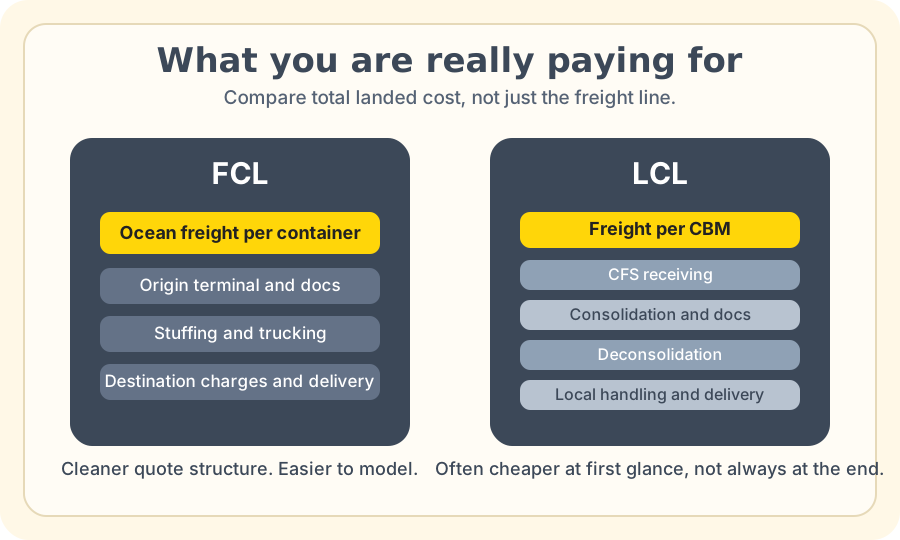
This is where many businesses make the wrong call. They compare only the basic freight rate and assume they have done the math. Usually they have not.
How FCL is priced
With FCL, the main freight is quoted per container. A 20-foot container has one freight rate. A 40-foot container has another.
Your total cost may include:
- Ocean freight
- Origin terminal handling
- Documentation charges
- Container pickup and transport
- Stuffing charges if the container is loaded at factory or warehouse
- Customs clearance charges for imports or exports
- Destination charges and final delivery
The advantage is clarity. Once you know the container size and route, the structure is fairly straightforward.
How LCL is priced
With LCL, freight is usually quoted per CBM or by chargeable weight, depending on the cargo and route.
Your total cost may include:
- Freight per CBM
- CFS receiving charges
- Consolidation charges at origin
- Deconsolidation charges at destination
- Documentation fees
- Customs handling
- Delivery from CFS to final destination
This is why an LCL shipment can look cheap at first glance and then become expensive by the time all local charges are added. Shared space lowers the base freight, but the handling is heavier and the billing is more fragmented.
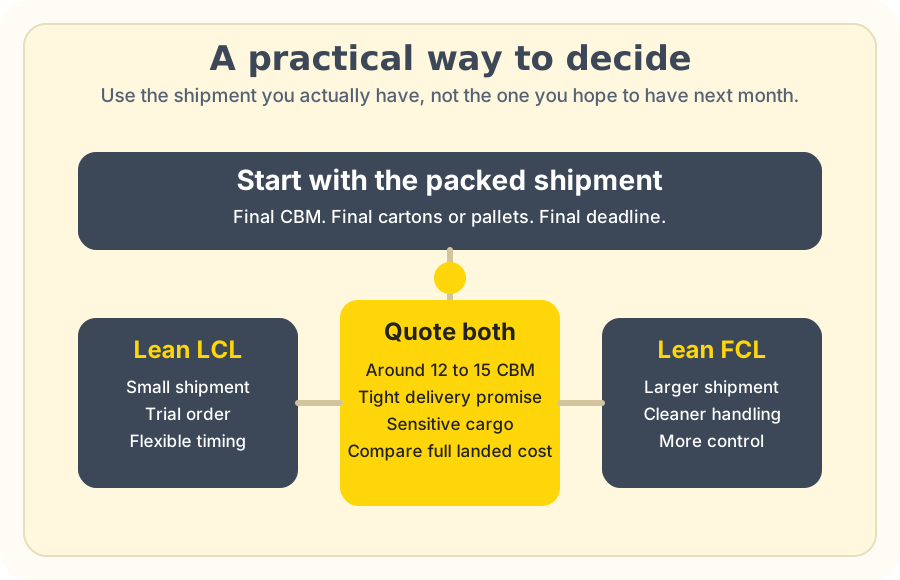
As a rough working rule, many shippers start comparing FCL and LCL seriously once a shipment reaches around 12 to 15 CBM. That is not a rule carved in stone. It just means the numbers are close enough that you should price both options before booking.
When FCL makes sense
1. Your shipment volume is high enough
If your cargo is already taking up a large share of a container, FCL usually becomes the cleaner choice. At that point, paying for exclusive use often makes more sense than paying LCL freight plus multiple CFS charges.
This is common for businesses importing machinery, raw materials, packaging material, auto parts, or regular stock replenishment in volume.
2. You want fewer handling points
FCL cargo is stuffed, sealed, moved to port, shipped, and opened at destination. There are fewer loading and unloading stages compared with LCL.
That matters if your cargo is fragile, carton-packed, moisture-sensitive, or simply not something you want moved around more than necessary.
3. You have tighter delivery commitments
FCL is usually more predictable. Once the container is booked and gated in, it does not have to wait for someone else's cargo to complete consolidation.
If you are shipping against a production plan, a customer deadline, or a store launch, predictability often matters more than shaving a little off the origin freight.
4. You are moving high-value or mixed cargo
Some importers prefer FCL because they do not want their goods packed alongside unrelated cargo. That can be a smart call for electronics, branded retail goods, finished products, or cargo with a higher theft or contamination risk.
FCL also gives you better control if one consignee is receiving multiple SKUs in the same shipment.
5. You need factory stuffing or seal control
For many exporters, especially around Chennai, stuffing at factory and sealing the container under supervision is part of keeping cargo control tight. FCL supports that much better than LCL, which usually requires delivery to a CFS for consolidation.
When LCL makes sense
1. Your cargo volume is small
This is the obvious one. If you have 2 CBM or 5 CBM, paying for a full container usually makes no sense unless the cargo is unusually sensitive or urgent.
LCL keeps the shipment moving without forcing you to wait until you have enough volume for FCL.
2. You are testing a new supplier or market
Many first-time importers do not want to commit to container-sized orders. LCL lets you bring in a smaller commercial shipment, inspect product quality, test customs classification, and understand landed cost before scaling up.
It is often the sensible first step.
3. Cash flow matters more than shipment exclusivity
Buying smaller lots can free up working capital. Instead of locking money into one large order, you can import in smaller cycles and replenish based on actual demand.
For small and mid-sized businesses, that is often a bigger advantage than securing a dedicated container.
4. Your shipping pattern is regular but not large
Some businesses never grow into FCL, and that is fine. If you ship modest volumes every month, LCL can become a steady routine rather than a stopgap.
The key is to plan it properly and work with a forwarder who gives clear cut-off dates, realistic transit times, and a clean breakdown of charges.
Why LCL often feels slower
Even when the vessel sailing is the same, LCL usually involves more steps before and after the ocean leg.
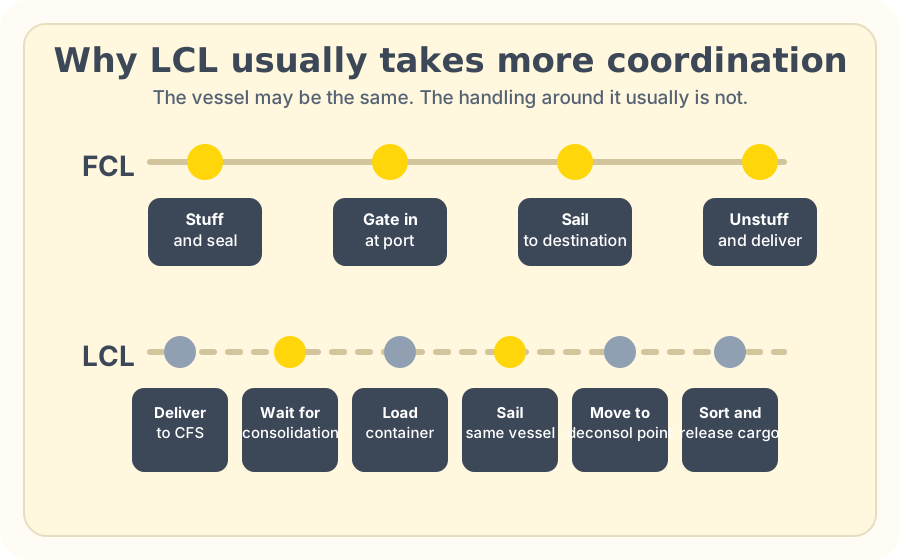
At origin, cargo has to reach the CFS before the consolidator's cut-off. Then it is checked, grouped with other shipments, loaded into the container, and documented.
At destination, the reverse happens. The container is moved to a deconsolidation point, unloaded, sorted, and released consignment by consignment.
That extra coordination can add time in a few places:
- Before sailing, while consolidation is being completed
- After arrival, while the container is unpacked at destination
- During customs examination, if one shipment in the consolidation creates delays
FCL is not immune to delays. Ports get congested, vessels roll, documents go wrong. But all else being equal, FCL usually has fewer moving parts.
Cargo safety and packaging
Most LCL damage claims start with poor packaging, not with the vessel itself.
Because LCL cargo is handled more often, packed alongside other consignments, and moved through CFS operations, packaging has to work harder. Cartons that are fine for domestic trucking may not hold up well in international LCL movement.
If you are shipping LCL, the basics matter:
- Use export-worthy cartons or pallets
- Shrink-wrap and strap loose cargo
- Mark every package clearly with consignee details and destination
- Keep dimensions and weights accurate
- Insure valuable cargo
FCL also needs good packaging, but the risk profile is lower because the shipment is not being repeatedly grouped and separated.
Common mistakes businesses make
Choosing LCL because the base freight looks lower
This is the classic error. A low per-CBM rate can look attractive until origin CFS charges, destination deconsolidation charges, and local handling fees are added.
Always compare the door-to-door landed cost, not just the line item called freight.
Booking FCL too early
The reverse mistake happens too. Some importers book a full container for a shipment that is still too small, then end up paying for unused space they did not need.
FCL should buy you something meaningful: better timing, lower damage risk, easier cargo control, or a total landed cost that is close enough to justify it.
Ignoring dimensions
LCL billing depends heavily on measurement. A shipment that is light but bulky can cost more than expected because it consumes cube, not just weight.
If your packing is inefficient, LCL becomes expensive very quickly.
Treating LCL and FCL as only a freight decision
They are also supply chain decisions. The right choice depends on your inventory cycle, warehouse capacity, customer deadlines, and how much uncertainty your business can absorb.
What this often looks like in Chennai and Bengaluru
For exporters shipping through Chennai, LCL is common when orders are still building, sample volumes are moving, or the shipment is simply too small to justify a full container. Once order flow becomes predictable, many businesses shift to FCL because control and timing start to matter more.
For importers around Bengaluru, the calculation often includes inland coordination as well. A shipment may arrive by sea, move through Chennai, and then continue inland. In those cases, the "cheap" option on paper is not always the cheaper option once CFS handling, deconsolidation time, and final delivery are taken into account.
That is why businesses with regular shipments usually stop asking only, "Which rate is lower?" and start asking, "Which movement is easier to plan?"
How a freight forwarder helps you choose properly
A good freight forwarder does more than send two quotes and ask you to pick one.
They should help you compare:
- Total landed cost, not just freight
- Transit time, including cut-offs and deconsolidation delays
- Cargo sensitivity and packaging risk
- Port and CFS handling requirements
- How customs clearance will line up with cargo arrival
If the same partner is also handling customs clearance, the decision gets even cleaner. Documentation, clearance timing, and delivery coordination are all being planned together instead of in separate silos.
A simple way to decide
If you are unsure, ask these questions before booking:
- How many CBM is the shipment after final packing?
- What are the origin and destination local charges for both options?
- How sensitive is the cargo to extra handling?
- Is the delivery timeline strict, or do you have a buffer?
- Will paying for a full container improve control in a way that actually matters?
- Are you comparing total landed cost or just the ocean freight line?
Those answers usually point in the right direction very quickly.
Conclusion
There is no prize for choosing FCL or LCL on principle. The right answer depends on shipment size, timing, cargo type, and how much complexity your business wants to deal with.
If your cargo is small and flexible, LCL is often the sensible choice. If your cargo volume is growing, your deadlines are tighter, or your goods need cleaner handling, FCL usually starts to pull ahead.
The smart move is to compare both before every meaningful shipment, especially once volume reaches the point where the numbers get close.
Trinity Freight Services helps businesses compare FCL and LCL options for imports and exports through Chennai and Bengaluru. We look at the full movement, not just the base freight, so you can book with fewer surprises. Contact us to discuss your next shipment.